“I hear perfectly well when people speak clearly.”
It’s something we hear most weeks. Perhaps you follow one friend easily but struggle with another. Perhaps your partner starts talking while walking away. Or you hear the television perfectly, until the dialogue begins.
Sometimes people really do mumble. But if conversations are becoming harder to follow, it’s worth finding out why. You don’t need to decide whether you want hearing aids before asking a few questions.
Here are 20 you may recognise. There’s no score and nothing to pass or fail. These are simply everyday experiences worth talking about.
Does this sound familiar?
1. Is everyone mumbling, or could it be my hearing?
Sometimes it’s a bit of both. People may speak softly, rush their words or look away. Changes in hearing can make the softer details of speech harder to catch, too. Sounds such as “s”, “f” and “th” may become less distinct, even when the voice itself is easy to hear. “Fifteen” and “fifty” start to sound alike.
If more people seem to be mumbling than they used to, that’s a useful observation to bring to an appointment.
2. If I can hear someone talking, why can’t I understand them?
Hearing a sound and understanding it are different jobs. Think of a radio tuned almost, but not quite, to the right station. You hear someone talking, but the message isn’t clear, and turning up the volume doesn’t always help.
That’s why a full assessment looks at how clearly you understand speech, not only which beeps you hear.
More on this: Did You Say ‘Fake’ or ‘Fate’?!?
3. I can hear a tiny noise in the kitchen. Why do I miss what my partner says from the lounge?
Not all sounds make the same demands on your hearing. Noticing a clink or a beep is different from catching every part of a sentence. Distance, doorways and which way someone is facing also change what reaches you.
Hearing one small sound doesn’t tell us how clearly you hear speech. Try having the conversation in the same room and notice whether that makes it easier.
4. Why is a restaurant so much harder than home?
At home, you may be listening to one familiar voice in a quiet room. In a restaurant, that voice competes with music, crockery and other conversations. Hard floors and bare walls can add echoes.
This is why we include speech-in-noise testing when assessing difficulties in busy places. It helps us understand a problem that listening to beeps in a quiet booth may not fully explain.
5. Why does everyone complain about the television volume? It sounds fine to me.
You may be turning it up to catch the words, while everyone else notices how loud the whole program has become. Music and sound effects can then seem too loud without making the dialogue much clearer.
Try captions and, if your television has one, a dialogue or clear-speech setting.
But my hearing is fine!
6. My hearing test was normal a few years ago. Surely I’m still fine?
That result tells us about your hearing at the time. Hearing can change gradually, and a previous test may also have been a brief screening rather than a full assessment.
If something feels different now, it’s reasonable to check again. Bring your old results if you have them. Comparing them with today’s findings can be helpful.
7. Can my hearing test look normal when I’m still struggling?
Yes. A standard hearing graph shows the softest tones you can detect at the pitches tested. It doesn’t capture every part of following a real conversation.
If you’re struggling, tell us where and when it happens. We can consider speech-in-noise testing and other checks suited to your situation. A normal graph shouldn’t end the conversation, but it doesn’t establish a particular diagnosis on its own either.
More on this: My hearing test is normal… so why am I still struggling to hear?
8. Why can I hear one friend perfectly but struggle with another?
Voices differ in pitch, volume, pace and clarity. One friend may naturally face you and pause between sentences. Another may speak softly or finish a sentence while turning away.
Changes in hearing can make these differences more noticeable. Being able to follow one person comfortably doesn’t mean the difficulty with someone else is imagined. It gives us a useful clue about what helps.
9. Why does hearing seem easier on some days than others?
The surroundings change, and so do your energy and attention. Following a conversation after a restful morning can feel different from doing it at the end of a busy day. That doesn’t necessarily mean your hearing levels have changed.
If you notice a definite change in hearing, especially in one ear, have it checked. A sudden drop over hours or a few days needs urgent medical attention, even if the ear just feels blocked.
10. Can trying to hear really make me tired?
Yes. When words aren’t clear, you may spend more effort following the conversation and working out what you missed. A pleasant lunch can leave you feeling surprisingly worn out.
Choosing a quieter setting and allowing a listening break can help. Tiredness has many possible causes, so persistent fatigue is also worth discussing with your GP.
Let’s clear up some myths
11. Isn’t this just part of getting older?
Hearing changes become more common with age, but age isn’t the only possible explanation. Noise exposure, earwax, ear conditions and some medicines can also play a part.
Finding out the cause matters. And even when a change is age-related, there may be ways to make conversation easier.
12. Wouldn’t I be the first to notice if my hearing changed?
Not necessarily. Gradual changes can be easy to work around without realising it. You might move closer, watch faces more carefully or let someone else answer the telephone.
Family may notice the extra repeating before you notice anything different. Their observations can be useful, but so can yours. An assessment gives you something more concrete to discuss than who thinks the television is too loud.
13. My partner says I don’t listen. Why don’t they speak clearly?
Often there’s some truth on both sides. Calling from another room, talking while walking away or repeating something with a sigh makes conversation harder for anyone. A change in hearing can make it harder again.
The fix is shared. Seeing someone’s face adds useful clues, and asking for that isn’t cheating. Question 19 has three easy places to start.
14. Is saying “pardon?” really such a big deal?
There’s nothing wrong with asking someone to repeat themselves. It shows you want to hear what they’re saying.
What’s worth noticing is whether it happens more often, or whether you’ve started saying “never mind” because asking again feels awkward. Try being specific: “I heard you say lunch. Was that Thursday?” That gives the other person something to clear up, rather than the same sentence again, louder.
15. I’m managing. Why do anything about it now?
You don’t have to be struggling badly to want things to be easier. Think about what “managing” means for you. Are you enjoying the conversation, or doing a lot of guessing? Are you choosing a quiet café because you like it, or avoiding a favourite place because conversation has become too difficult?
An assessment can help you understand those changes.
So what can we do about it?
16. Why should I get tested? I’m not ready for hearing aids.
You can be ready for answers without being ready for hearing aids. An assessment is a chance to understand your hearing and talk through your options.
Sometimes the next step is practical advice. Sometimes wax needs clearing or an ear problem needs medical attention. If hearing aids could help, we’ll explain why and discuss them with you. Having a test doesn’t commit you to buying anything.
17. What should a full hearing assessment actually tell me?
It should help explain both what you hear and what you find difficult. We start with your experiences, examine your ears and choose tests that answer the relevant questions. These may include:
- The beep test: the softest sounds you hear at different pitches in each ear.
- Word-recognition testing: how clearly you identify spoken words at selected listening levels.
- Speech-in-noise testing: how well you follow speech when other sound competes with it.
- Middle-ear checks: how your eardrum and middle ear are functioning.
- Extended-high-frequency testing, where appropriate: hearing at pitches above the usual test range, adding information when your history or symptoms warrant it.
You should leave understanding the findings, how they relate to your concerns and what the next steps could be.
More on extended-high-frequency testing: Your Hearing Test Stopped at 8,000 Hz. Your Hearing Doesn’t.
18. Are hearing aids the only thing that can help?
No. What helps depends on the cause of the difficulty and what you want to do more comfortably. Options may include treatment for an ear problem, communication strategies, captions, television listening equipment or a remote microphone that brings a speaker’s voice closer.
For some people, hearing aids are an important part of the answer. We discuss the options in relation to your life, whether that’s family dinners, work meetings or hearing the grandchildren’s stories.
More on this: 20 Every Day Questions on Hearing Aids
19. What are three things we can try before the next family get-together?
Get each other’s attention first. A name, a glance and a moment to look up give the conversation a better start. It works best when the whole family knows about it.
Ask about the part you missed. If the words still aren’t clear the second time, ask the speaker to put them another way.
Choose your seat. Sit close to the people you want to hear, where you can see their faces. Choose a quieter spot away from speakers and kitchen clatter. Lowering background music helps the whole table.
More on this: Ten simple things that help you hear your best
20. What’s the one thing you wish more people understood about hearing?
You don’t need to wait until you’re sure you have a hearing problem to ask about it. “I hear people, but sometimes I miss the words” is enough to start a useful conversation.
Write down one situation that bothers you and bring it along. We can start there.
Ready for a few answers?
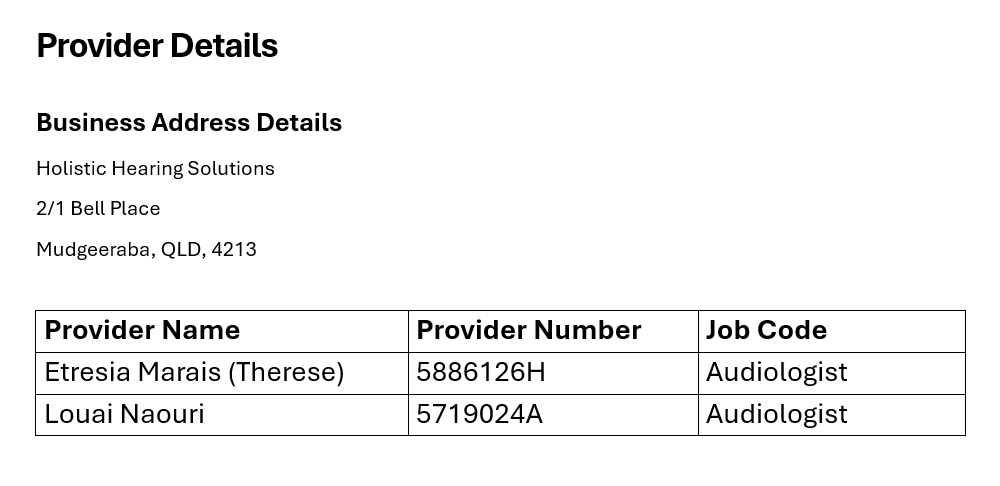
If any of these questions sound familiar, call Holistic Hearing Solutions on 07 5619 3007 or book online to arrange a comprehensive hearing assessment at our Mudgeeraba clinic on the Gold Coast.
Bring your questions and, if you’d like, someone you often talk with. You don’t need to arrive with a decision already made.
Further reading
- National Institute on Deafness and Other Communication Disorders: Age-Related Hearing Loss.
- National Institute on Aging: Hearing Loss: A Common Problem for Older Adults.
- American Speech-Language-Hearing Association: Hearing Loss in Adults.
- American Speech-Language-Hearing Association: Tips for Communicating With Someone Who Has Hearing Loss.
- Ashford and St Peter’s Hospitals NHS Foundation Trust: Hearing Difficulties When a Hearing Test is Normal.
- NHS: Hearing Loss.
- National Institute on Deafness and Other Communication Disorders: Sudden Sensorineural Hearing Loss.
- Soundfair: Hearing Loss.